Net piece
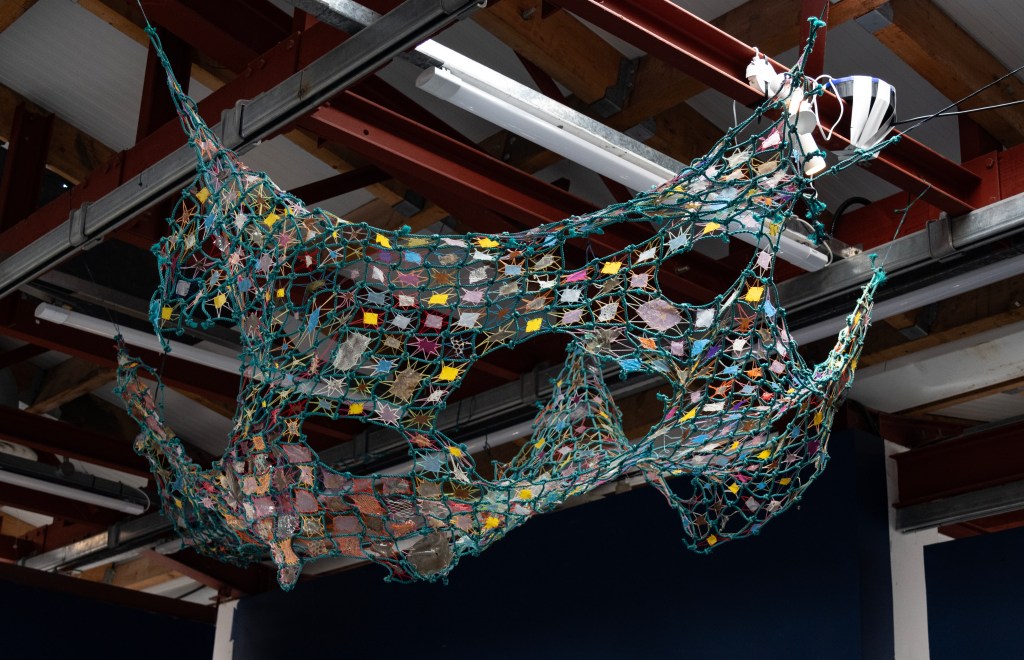
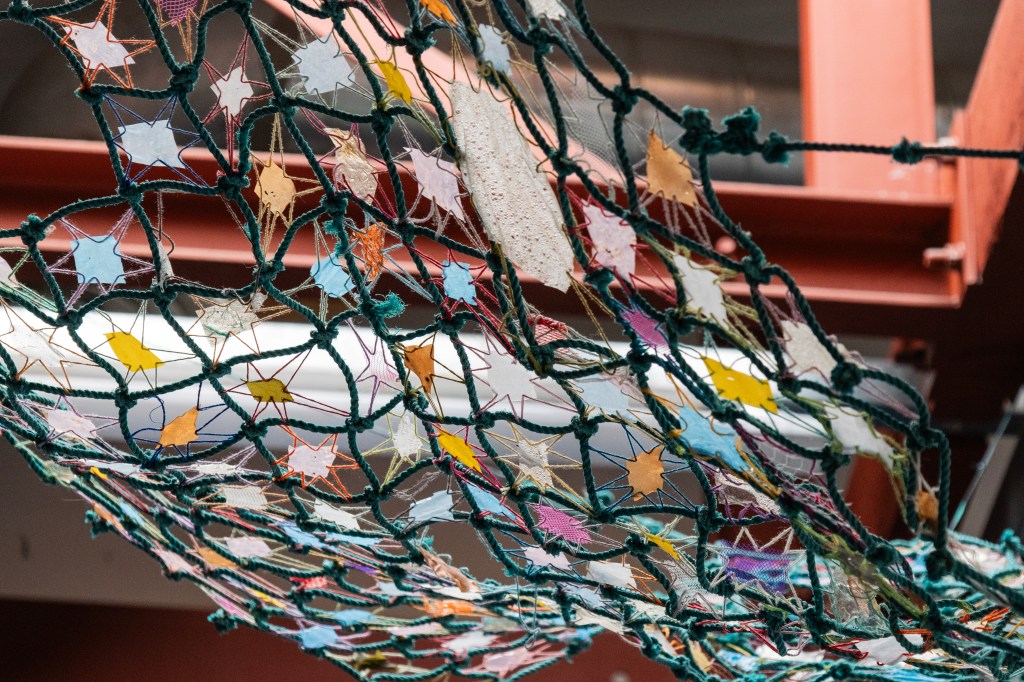
For the first third of 2024, I worked on a site-specific installation titled Enchanted Bones: Dreaming of a Circular Economy. It featured a torn and washed-up fishing net I found while walking along Fanore beach, which I took back to my studio and adorned. I filled its holes with bioplastic and foraged elements, including organic abundances and synthetic detritus from around my local area in County Clare, Ireland. This piece was exhibited at the 2024 spring open studios at the Burren College of Art in April 2024.
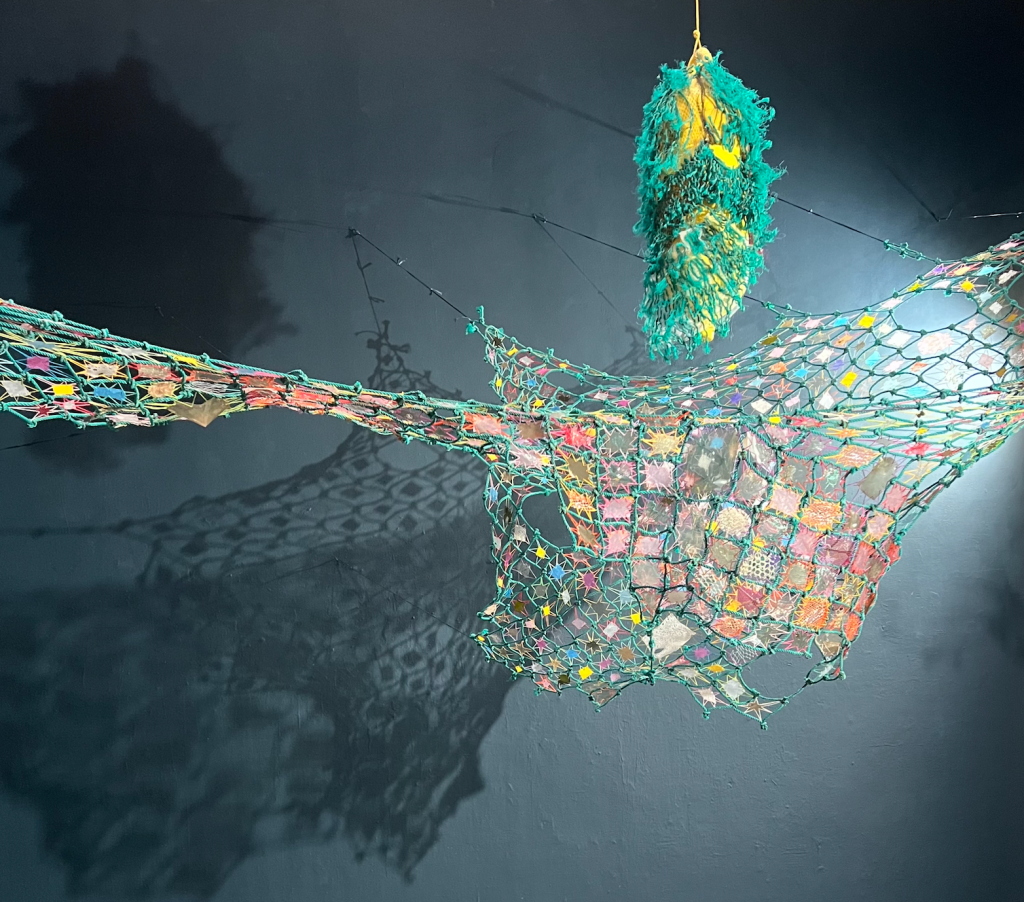


This piece was meditative and took the better part of three months for me to complete. All of the experimenting I did in 2023 helped influence how I addressed the net – many of the little panels in each net square are made with bioplastic sheeting I made using the organic foraged elements like red onion skin dye, shaggy ink-cap mushroom, eggshells, soap, and nori seaweed. There were also many panels which included foraged synthetic plastic panels which I found on the beach walks I would regularly go on at the Flaggy shore and Fanore beach in county Clare.

I felt this piece was a turning point in my artistic practice, as I moved toward installation work, and felt confident in using alternative and found materials. I was able to transform the space with a little bit of paint, and some thoughtful lighting, which is something I had not had the chance to control until this point.
Bioplastic Lamp Experiment
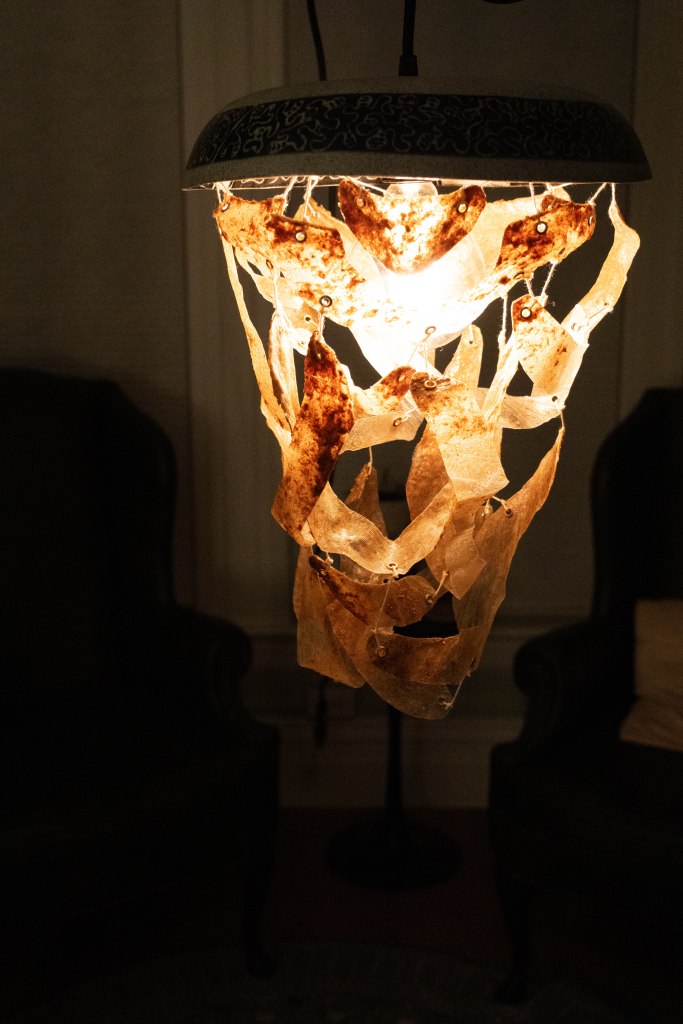
During the break between the 2nd & 3rd semesters of my MFA, I pursued a research project at UC Berkeley with professor Paul Mayencourt. I was curious about the viability (environmental and practical) of the gelatin I had been using in the bioplastic elements of my recent work, and Paul helped me evaluate the ‘usefulness’ of the material using a few different methods (you can read about it in detail below). My experiments culminated in a research paper, a zine, and a bioplastic/ceramic lamp which is still up in the Department of Environmental Science, Policy, and Management at UC Berkeley.


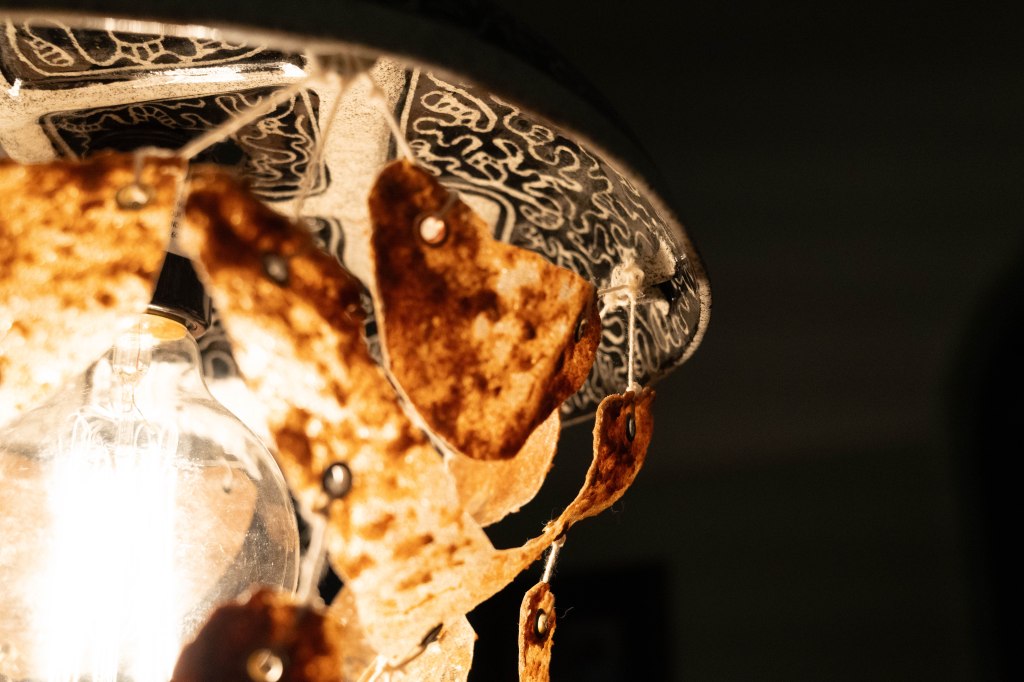
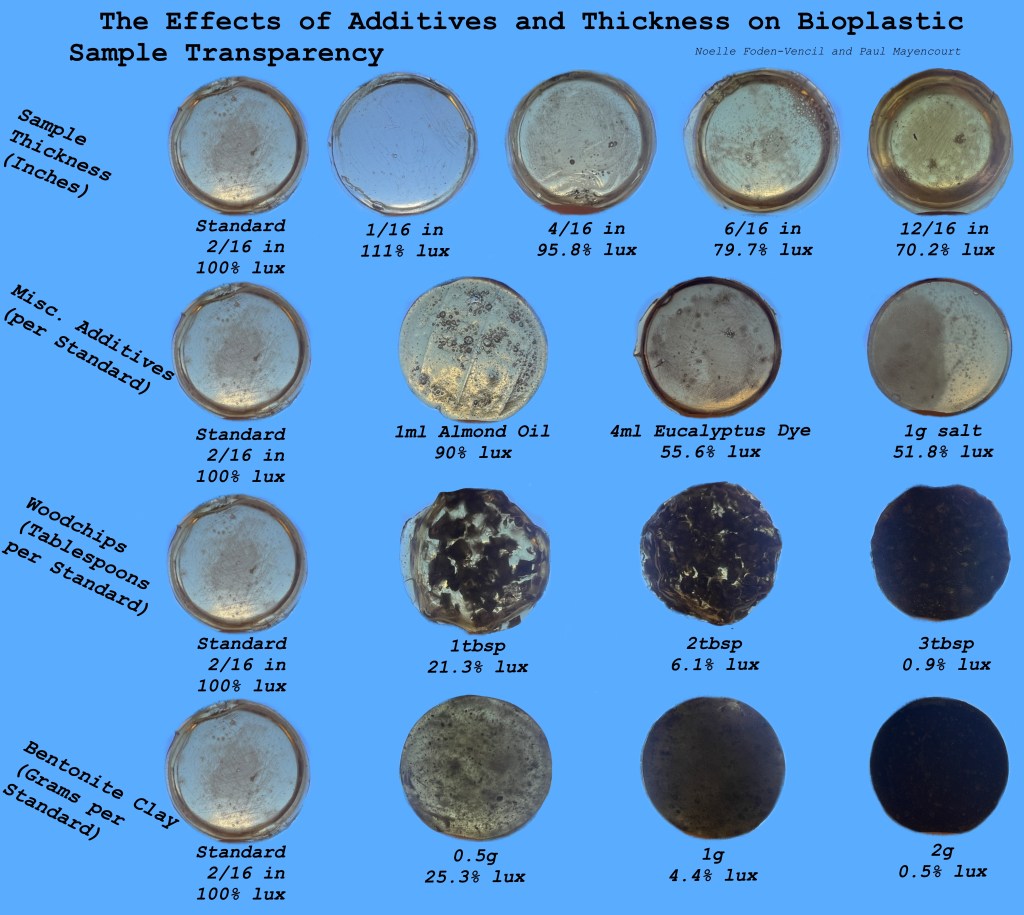
I was able to investigate the quantitative translucent properties of the gelatin bioplastic with organic additives and thickness of the material.
I was able to use discarded wood chips from the Berkeley wood lab where I conducted my experiments, as organic additives to test its effects on elasticity.
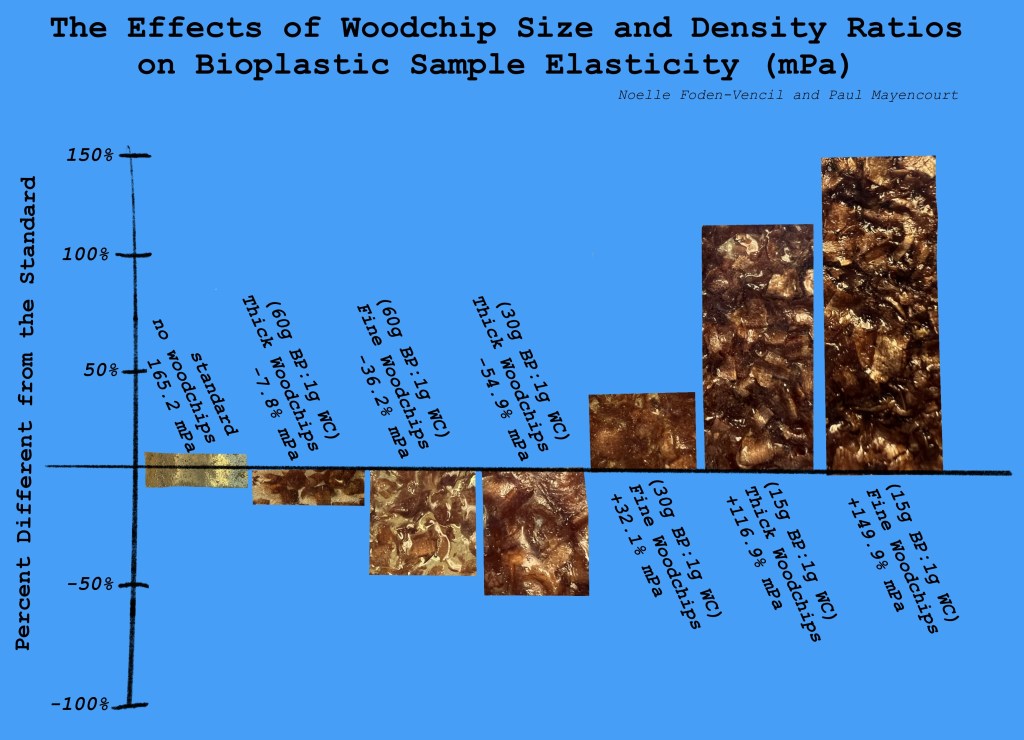

The findings I came away with from this research period involved the realization that gelatin-based bioplastics were beautiful and interesting to speculate on, but unlikely to be able to fill production gaps where traditional plastics are being used due to its physical properties. In addition, the use of gelatin to replace traditional plastics would create a different climate problem compared to the one caused by synthetic plastics. This is why I begin to pivot away from featuring gelatin based bioplastics in my work, and I move toward repurposing existent soft plastics.
Community Installation
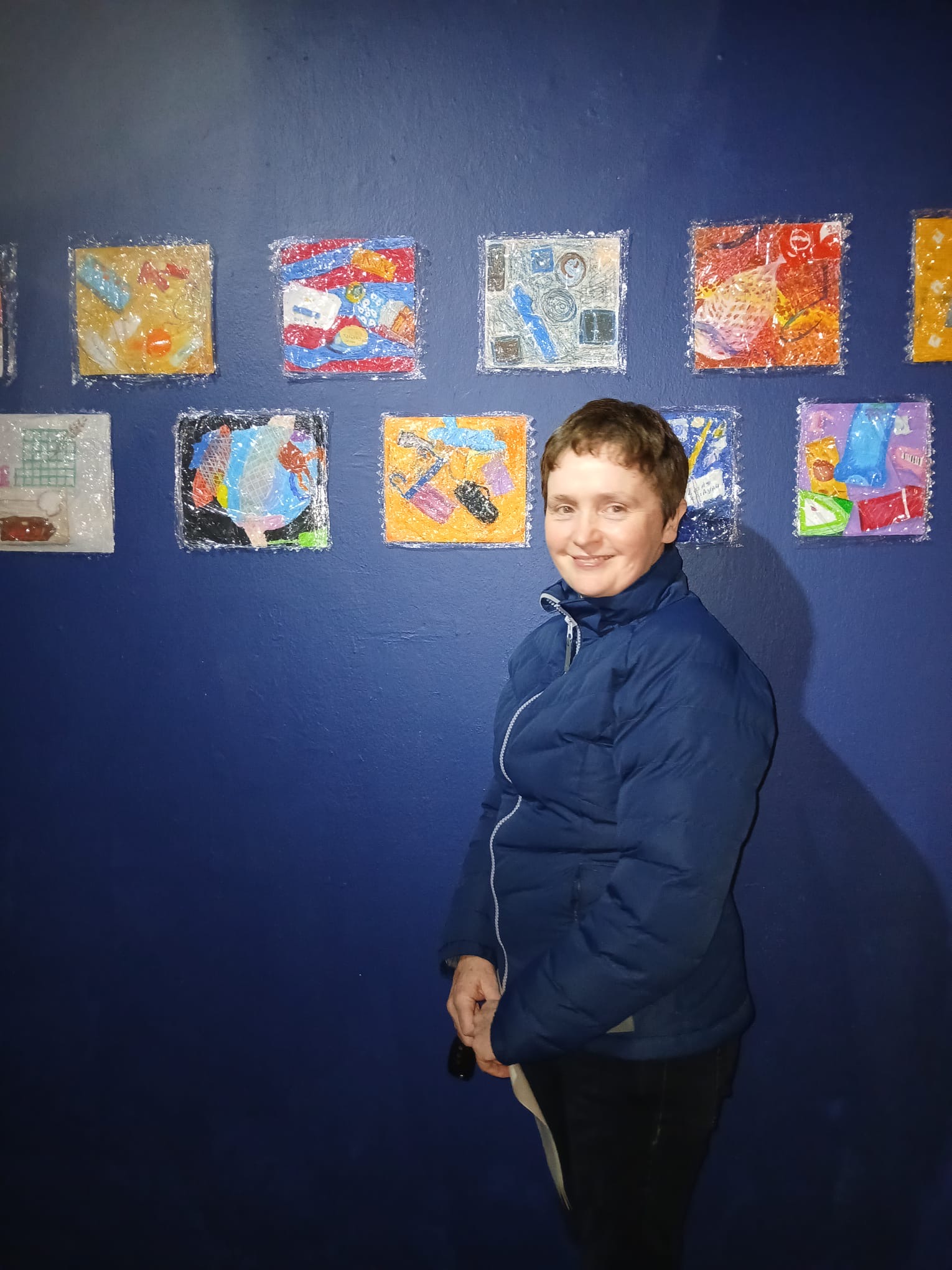
Beginning in September 2024, I began a community project in Ballyvaughan, Ireland, where I taught weekly art classes to ‘Art Group.’ During these classes, we would learn how to use traditional art-mediums like acrylic painting, oil pastels, pencil, and clay. Towards the end of the year, I asked the participants to put together collages of their own plastic waste, and bring them to class so that we could use oil pastels and recycled paper to create vibrant drawings of the collages. This collage project was inspired by late artist Candy Jernigan. With the permission of these participants, I included their drawings in an installation of mine which showcased a sculpture of a refrigerator using only the plastic waste from commercial businesses around Ballyvaughan and the local dump. This installation was featured in the December 2024-January 2025 exhibition Close Enough at the Burren College of Art gallery.

These are photos of one of the Art Group sessions, and includes many participants in this installation! I ran one at the community center in Ballyvaughan, and one at the Burren College of Art.


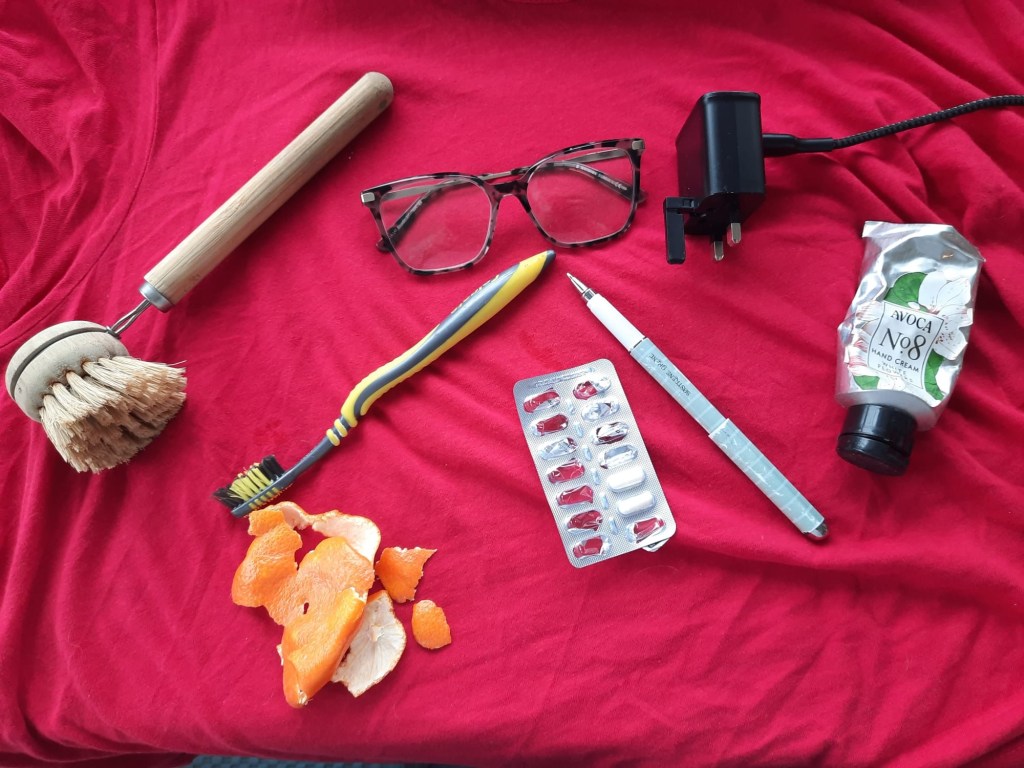
Once finished, I wrapped the drawings in discarded soft plastic packaging from the local Centra in Ballyvaughan and ironed/serrated the edges to make the packages look like candies. This specific drawing was made by artist Emer Casey from the collage she made below.


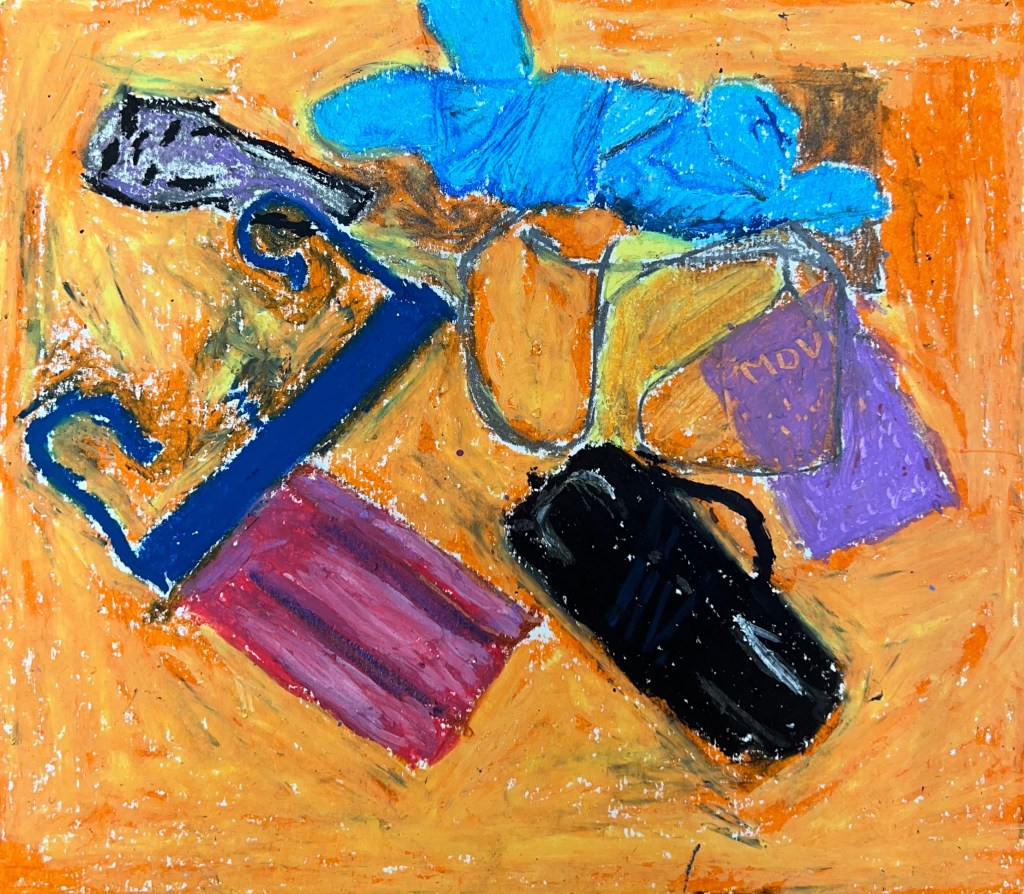

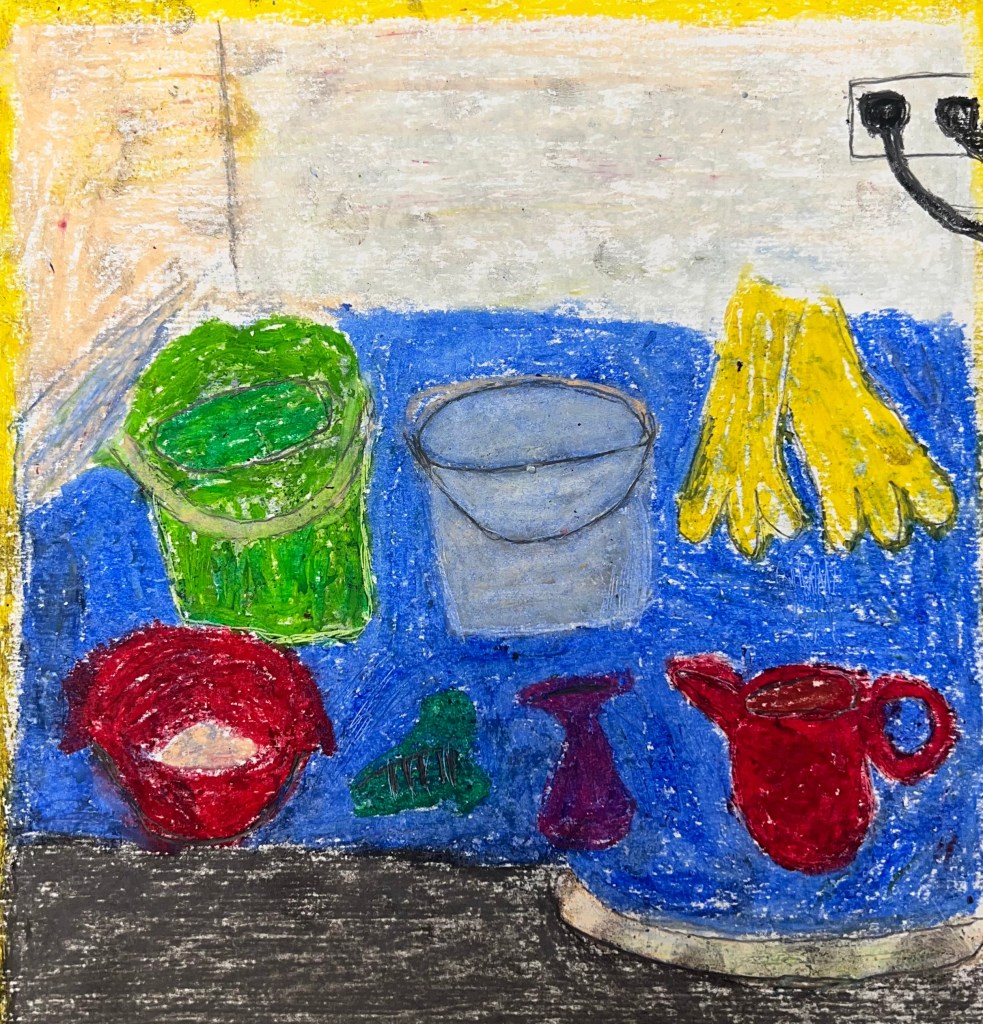
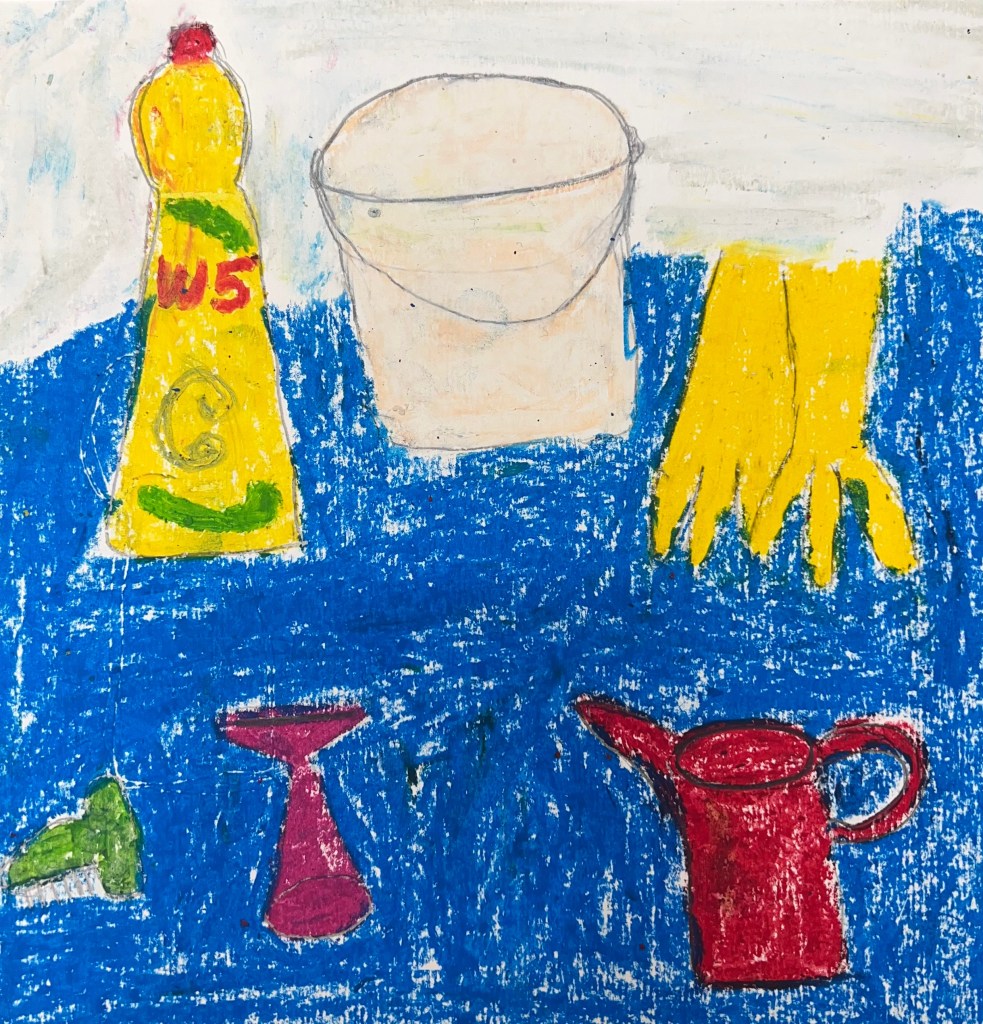

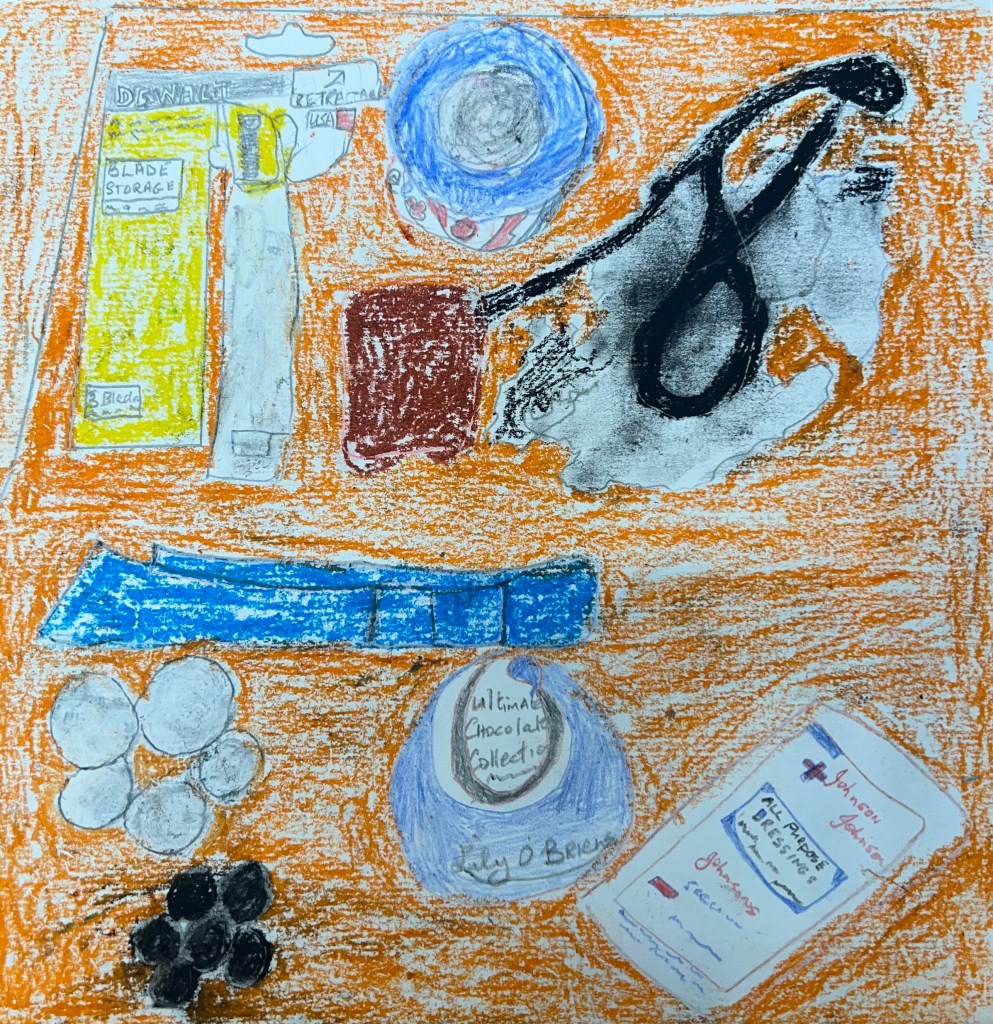
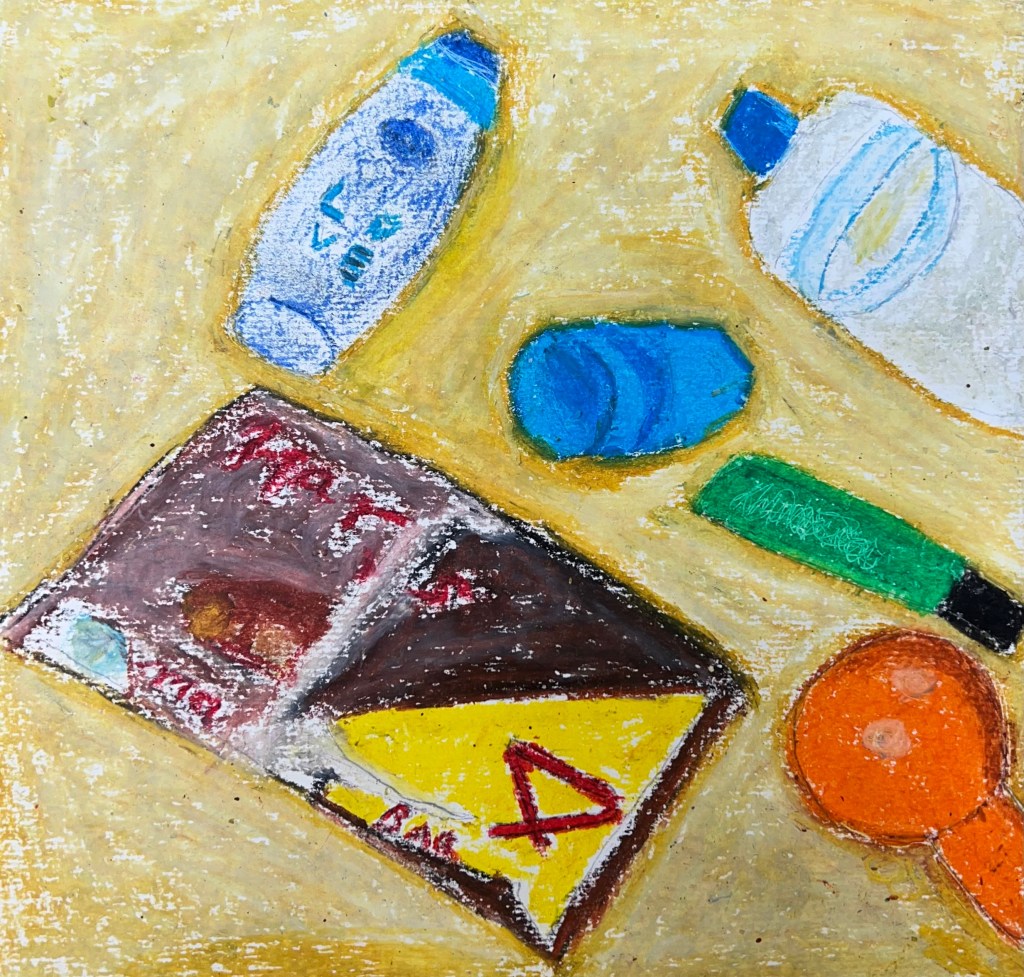

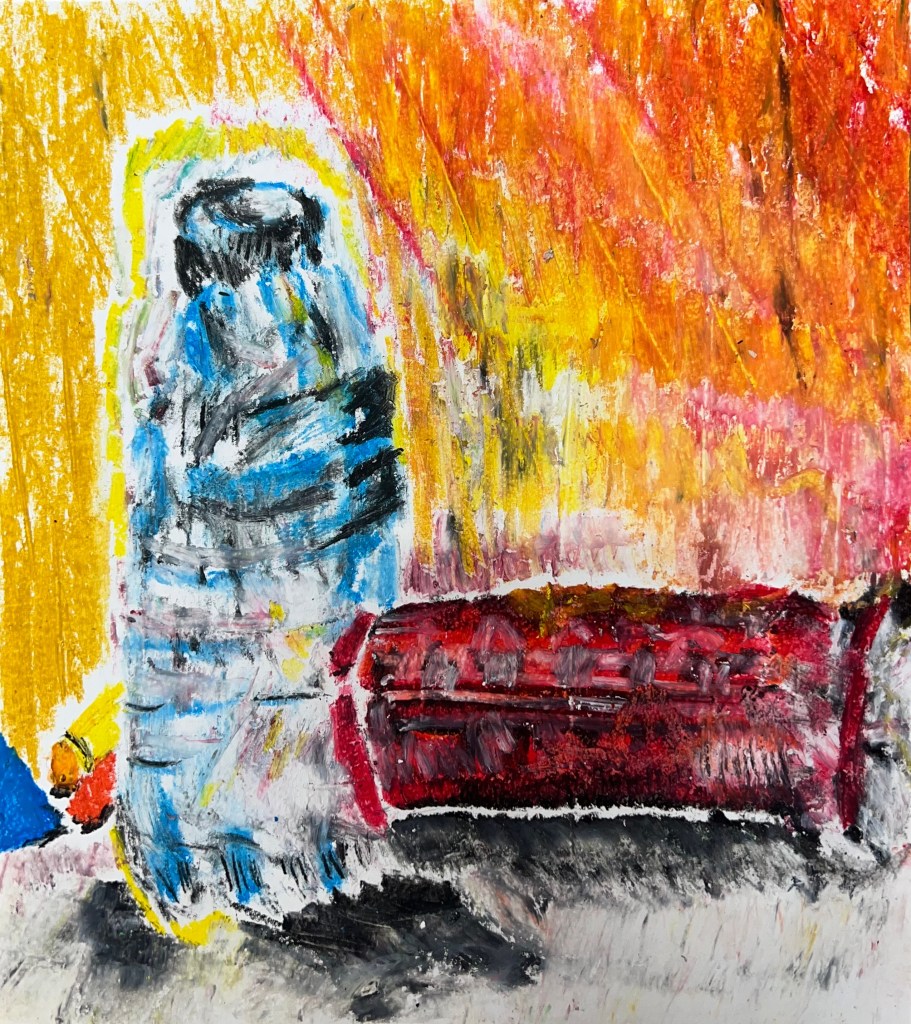


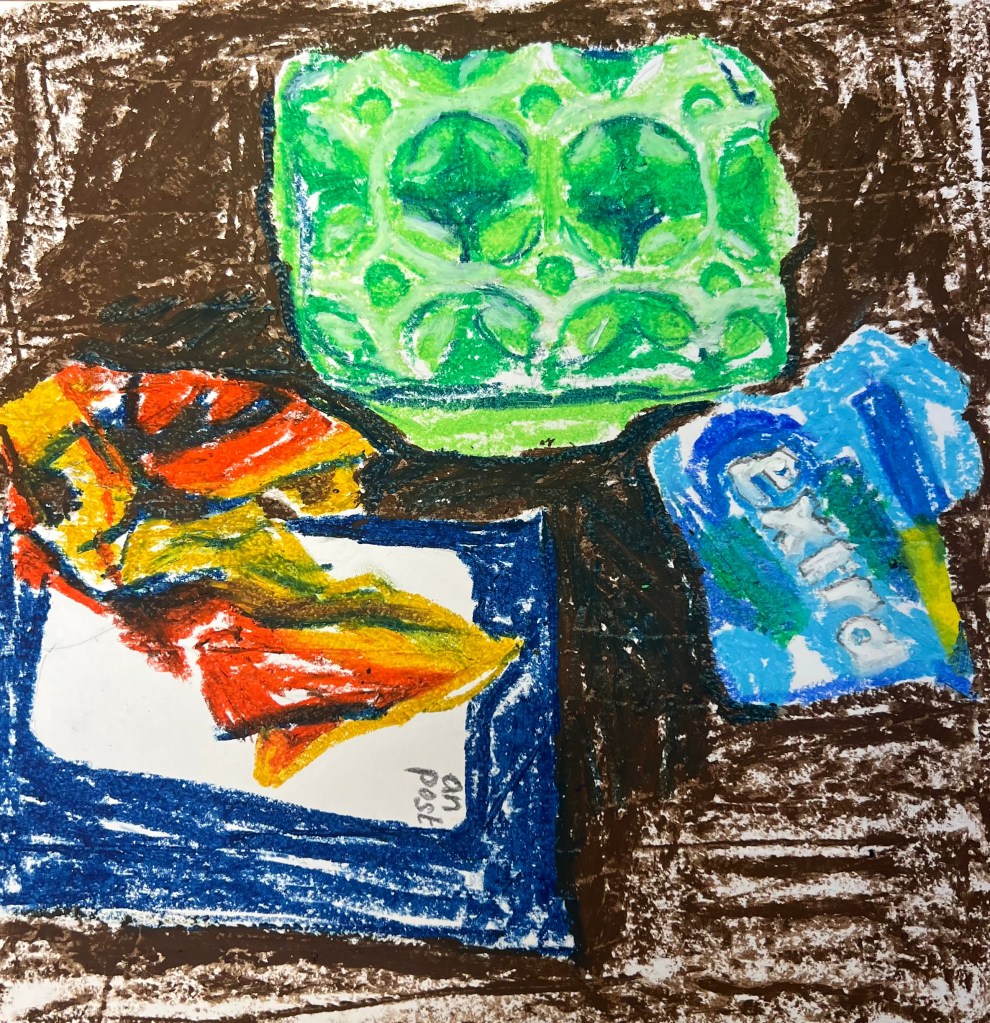
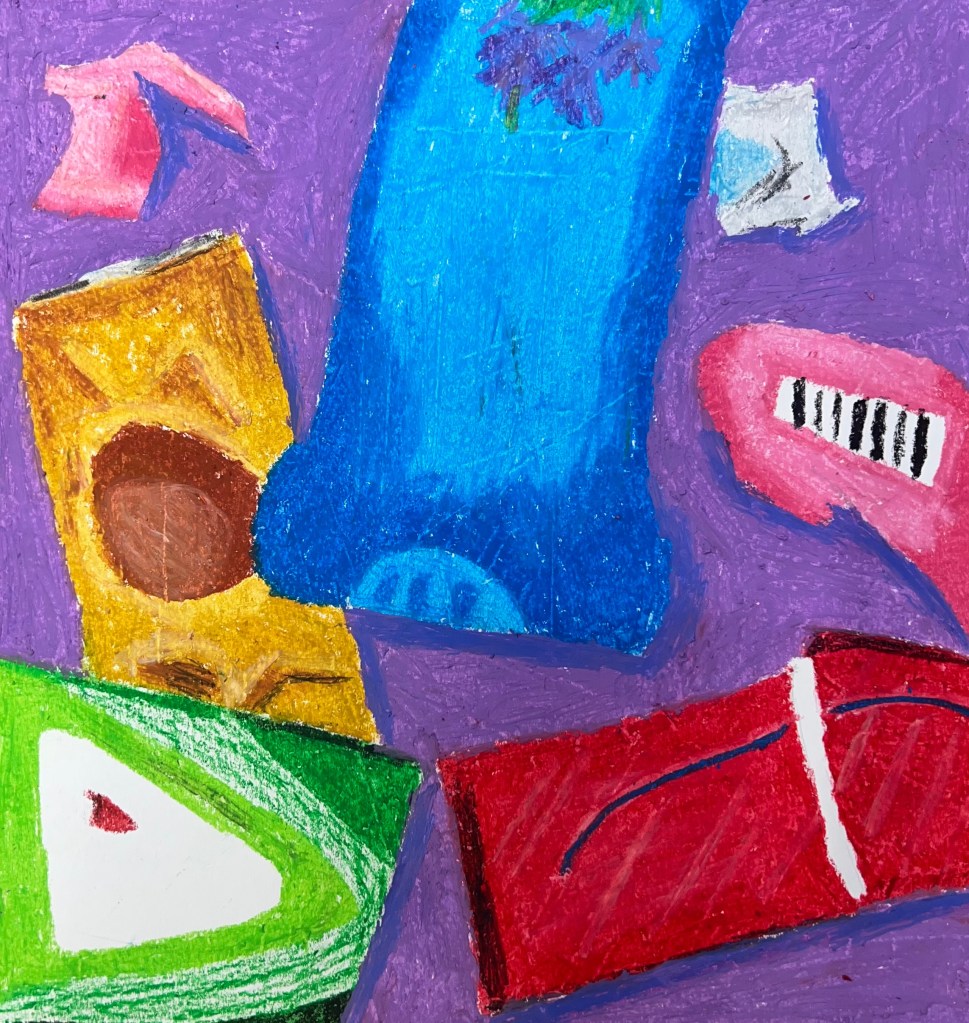

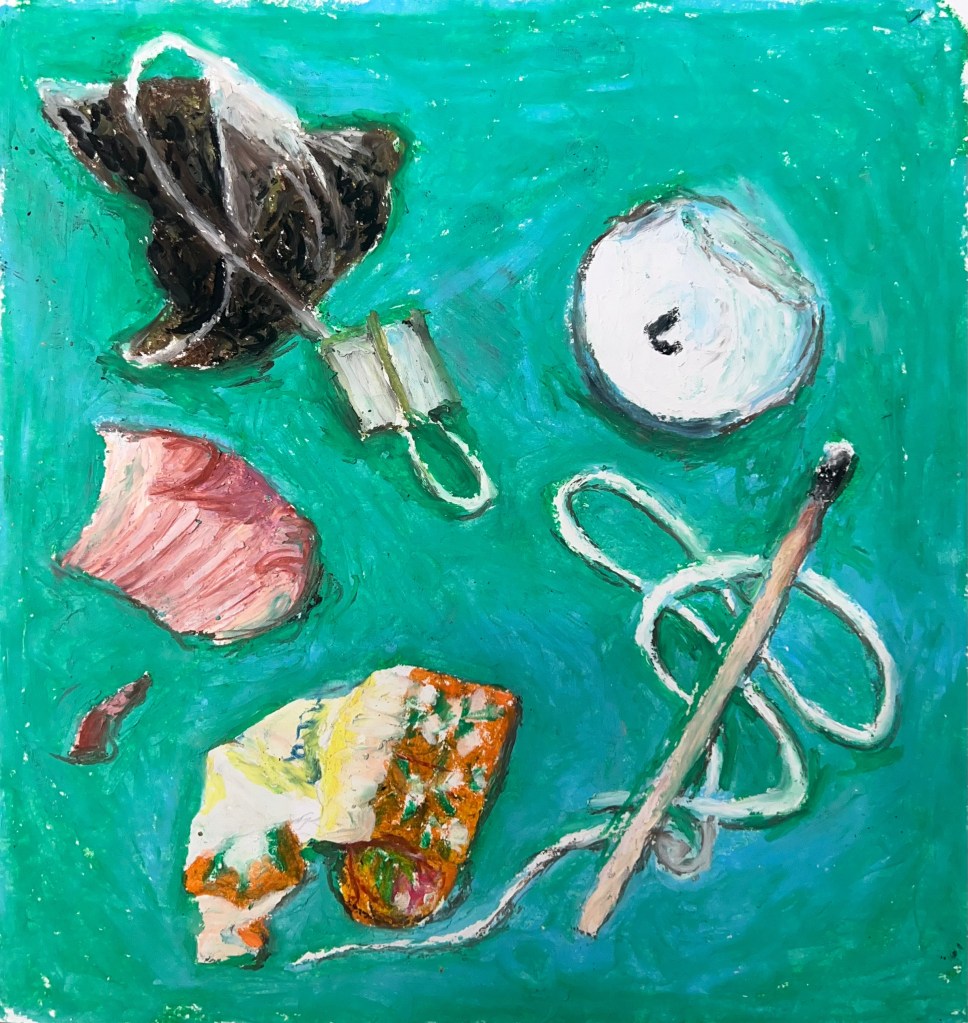

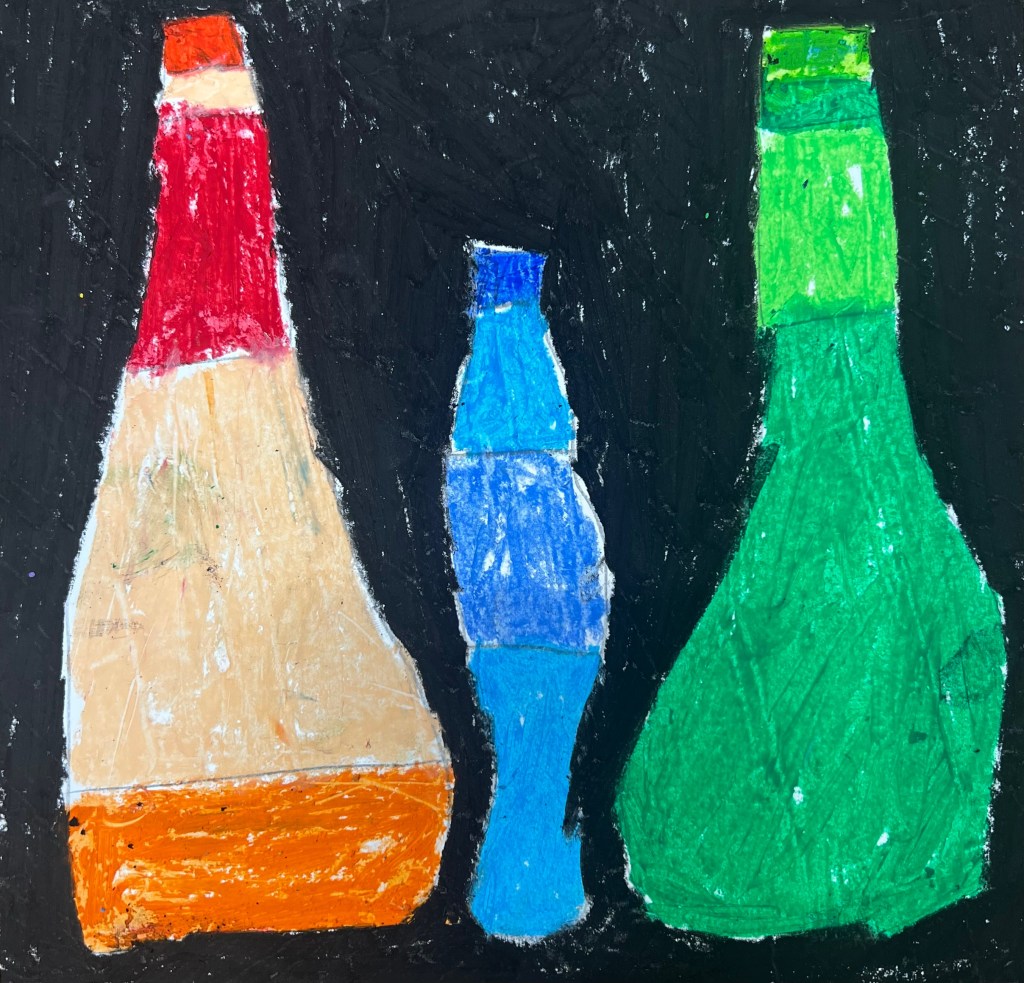
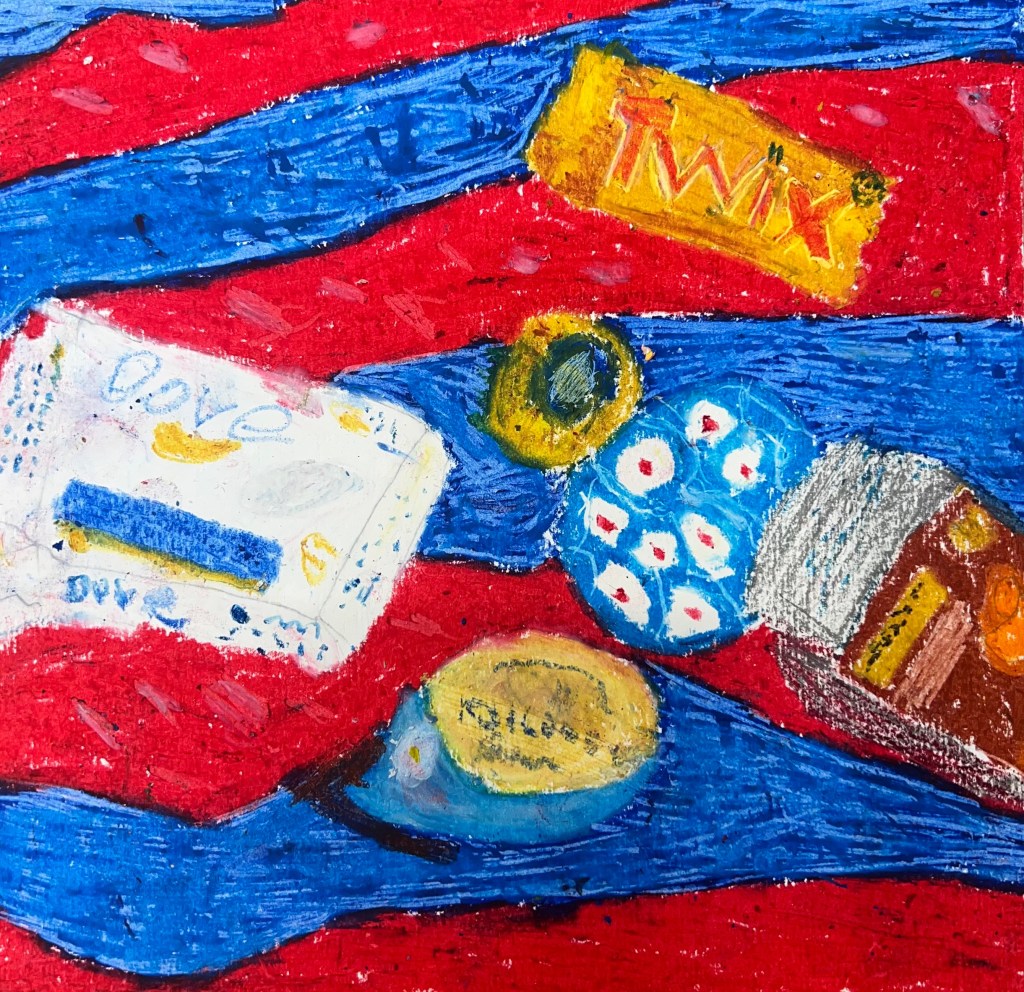


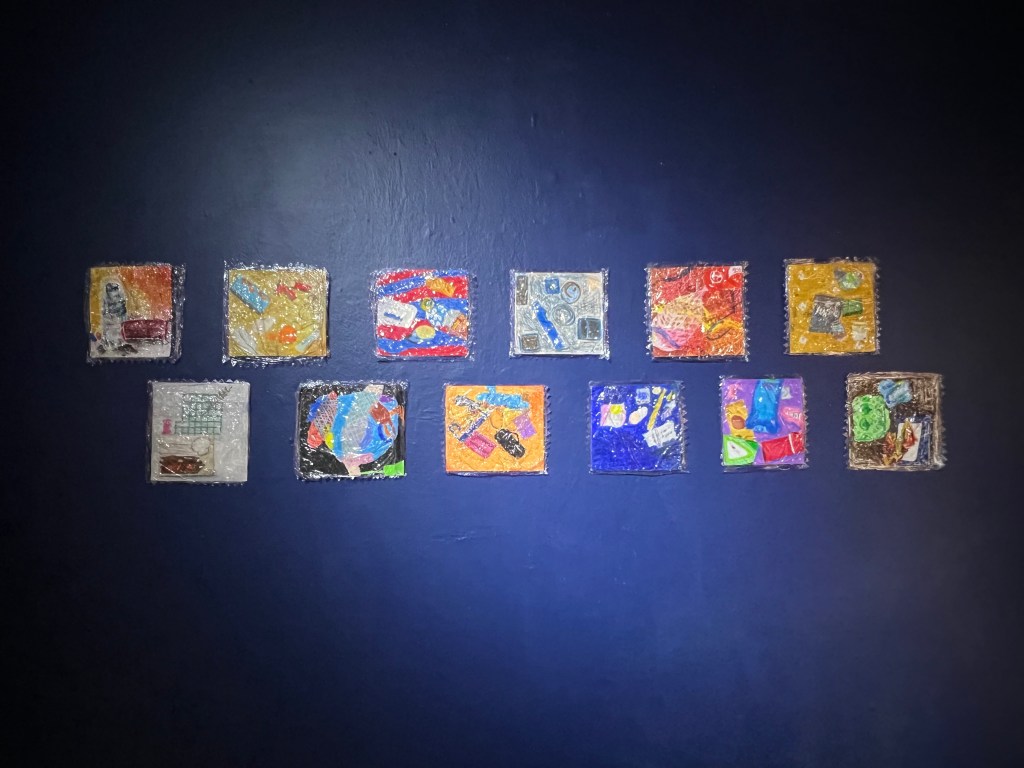
14b. Ailsa Duncan, Untitled, oil pastel on paper and encased in plastic packaging waste, 2024.
14c. Bríd, My Mess, oil pastel on paper and encased in plastic packaging waste, 2024.
14d. Brigid Keane, Untitled, oil pastel on paper and encased in plastic packaging waste, 2024.
14e. Lea Horenstein, Mesh or Sunset?, oil pastel on paper and encased in plastic packaging waste, 2024.
14f. Amber Capwell, Vitamin D, oil pastel on paper and encased in plastic packaging waste, 2024.
14g. Silvina Martin, Untitled, oil pastel on paper and encased in plastic packaging waste, 2024.
14h. Casey Ellson, Chicken Little Trash Guy, oil pastel on paper and encased in plastic packaging waste, 2024.
14i. Mary Leahy, Untitled, oil pastel on paper and encased in plastic packaging waste, 2024.
14j. John Connole, Untitled, oil pastel on paper and encased in plastic packaging waste, 2024.
14k. Autumn Loughery, Life in Plastic, oil pastel on paper and encased in plastic packaging waste, 2024.
14l. Eliza Guion, Grocery List, oil pastel on paper and encased in plastic packaging waste, 2024.
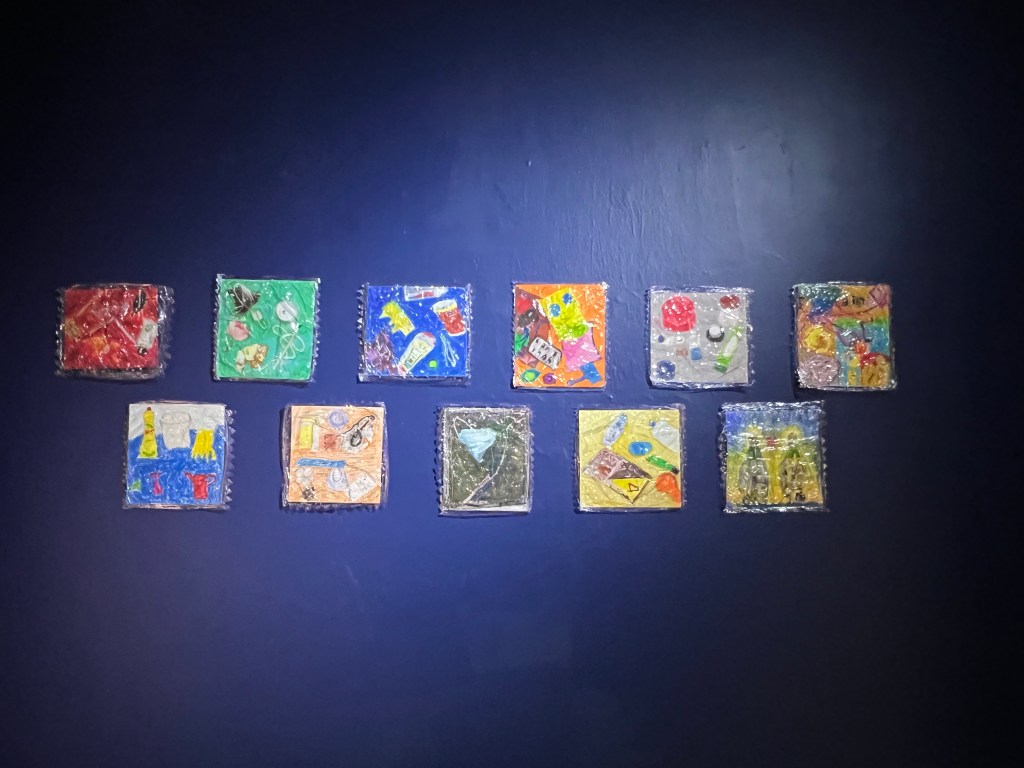
14n. Sara K Dunn, Creature Comforts, oil pastel on paper and encased in plastic packaging waste, 2024.
14o. Poona McNally, Rubbish, oil pastel on paper and encased in plastic packaging waste, 2024.
14p. Blue McDonnell, Untitled, oil pastel on paper and encased in plastic packaging waste, 2024.
14q. Nancy McMahon, Top of the Mountain, oil pastel on paper and encased in plastic packaging waste, 2024.
14r. Máire Wallace, Memories, oil pastel on paper and encased in plastic packaging waste, 2024.
14s. Kathleen Martyn, Keep it Clean, oil pastel on paper and encased in plastic packaging waste, 2024.
14t. Carmel Vaughan, My First Day, oil pastel on paper and encased in plastic packaging waste, 2024.
14u. Emma Stewart-Liberty, Untitled, oil pastel and graphite on paper and encased in plastic packaging waste, 2024.
14v. Rita Hurley, Love Planet Earth, oil pastel on paper and encased in plastic packaging waste, 2024.
14w. Clara Fuehler, You Know Uranium the Blue Green Glass, oil pastel on paper in plastic packaging waste, 2024.
Macro-before-Micro: a Refrigerated Meditation on Community Waste Streams
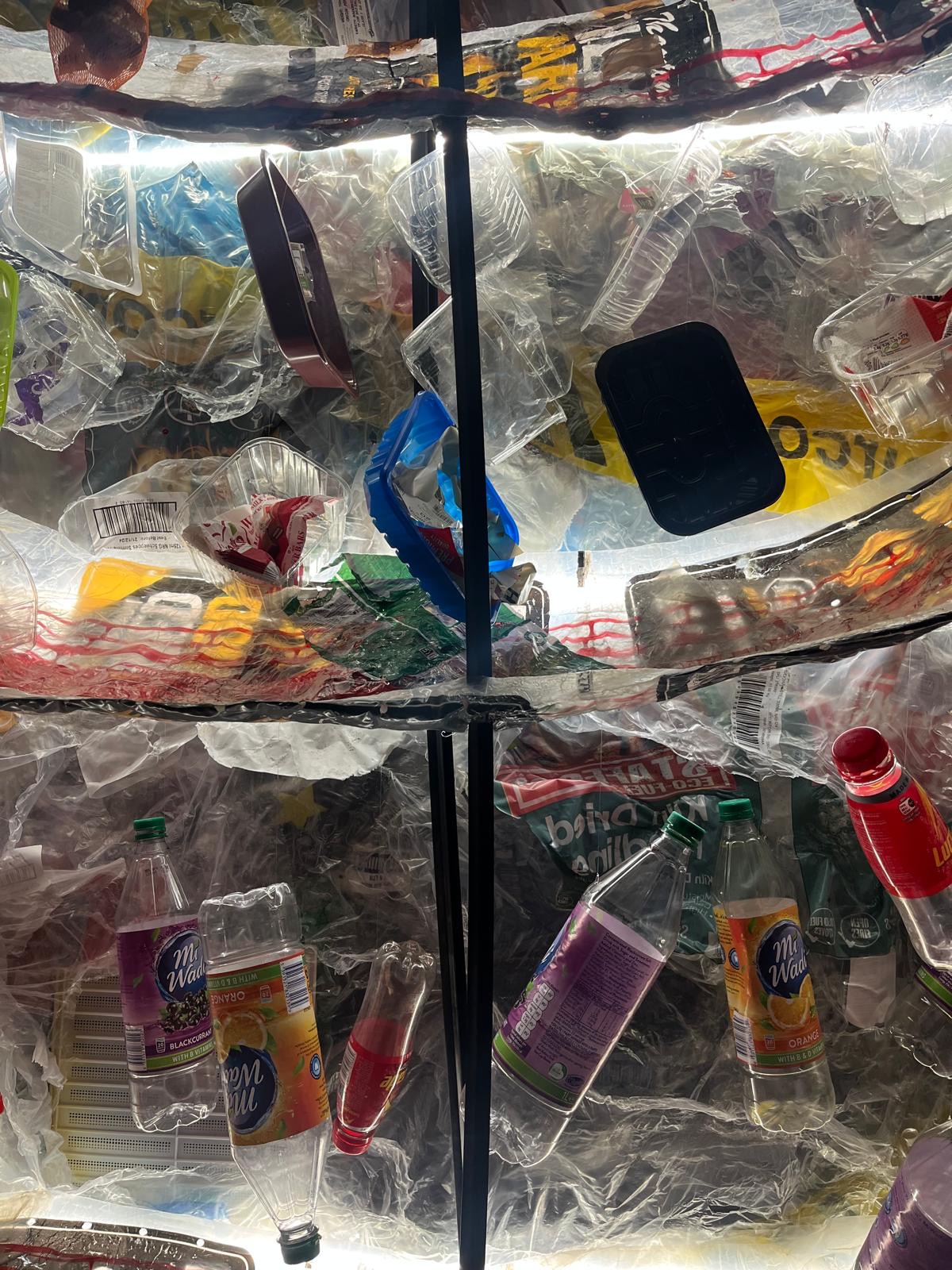
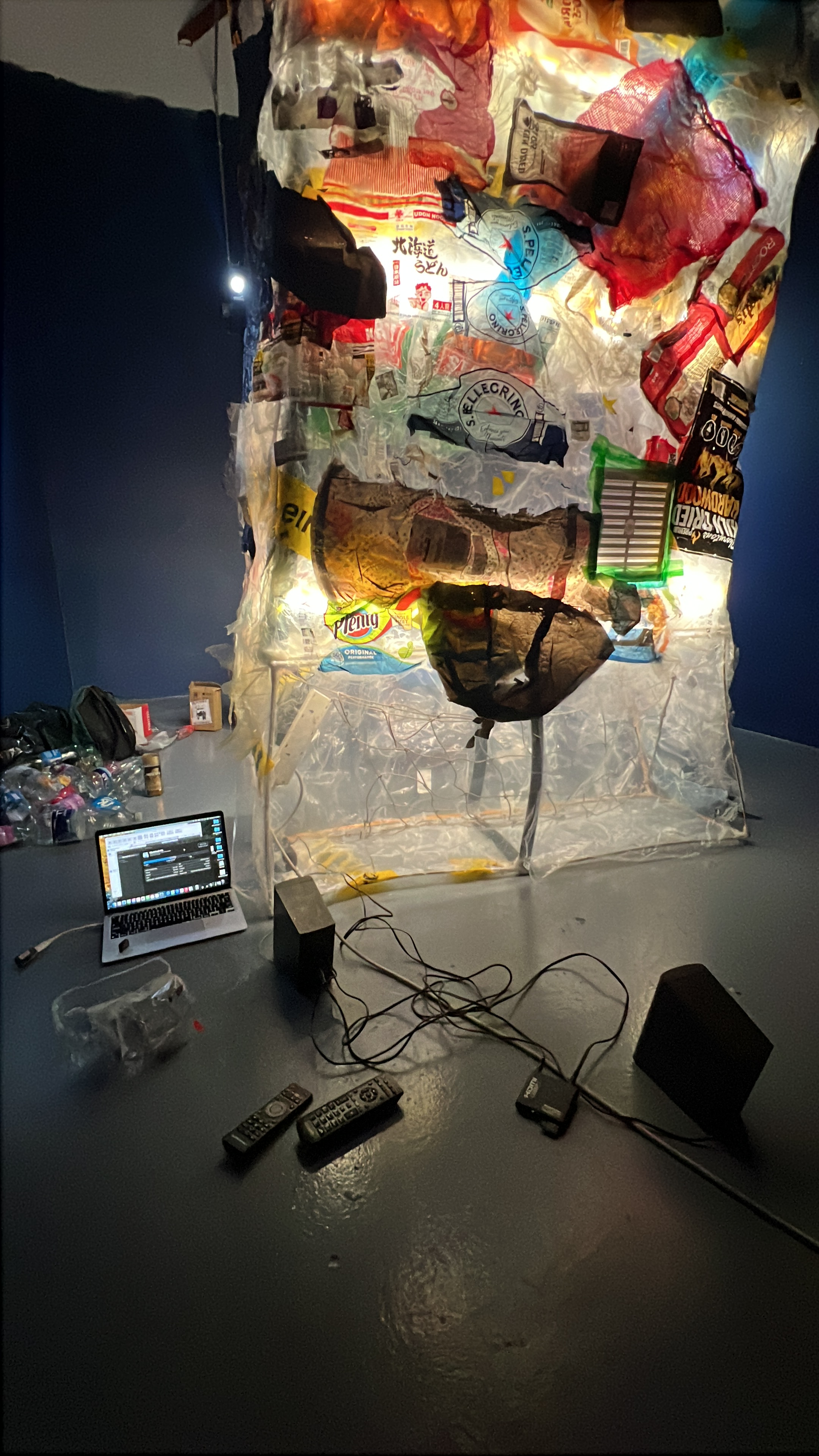
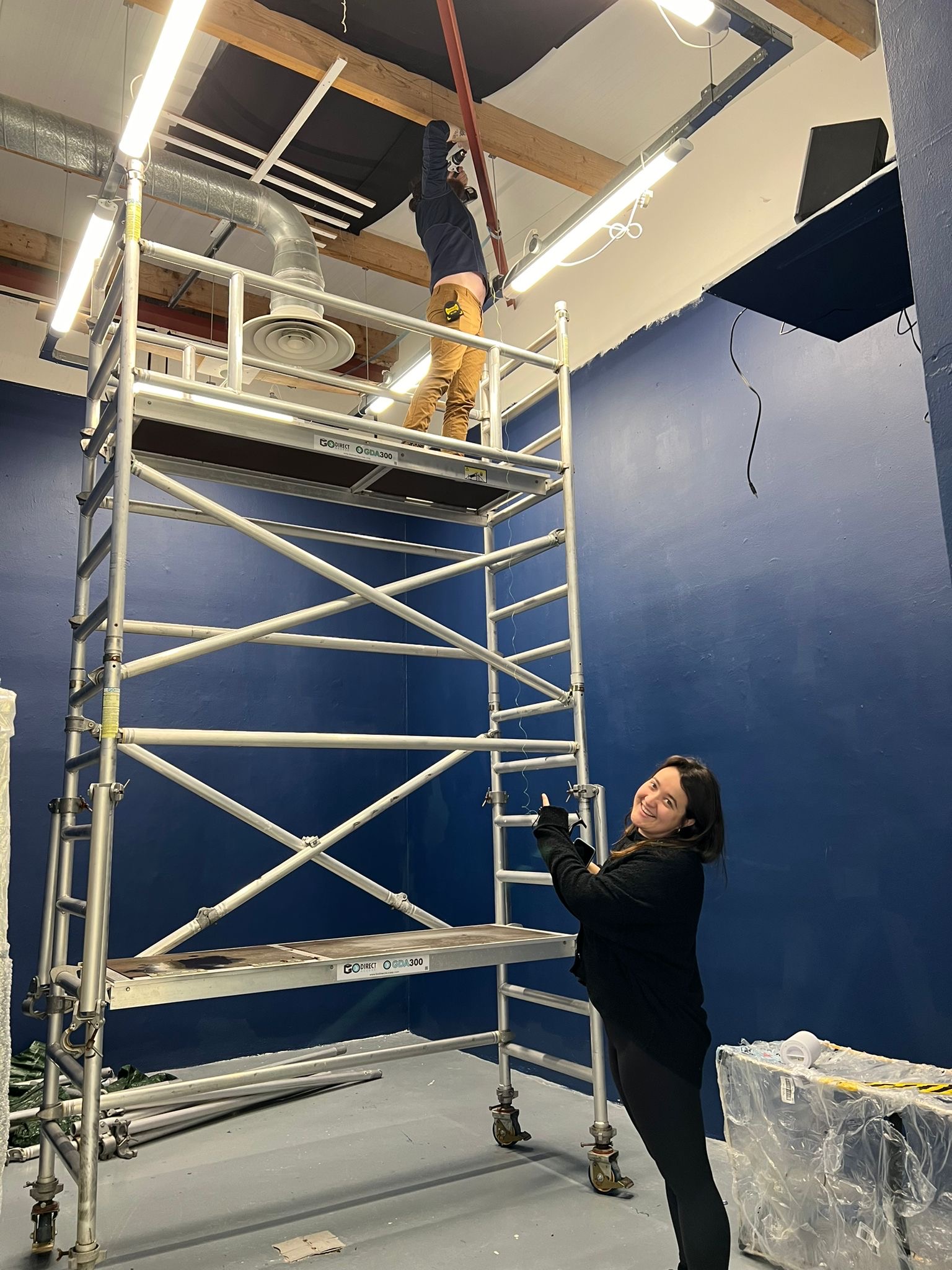
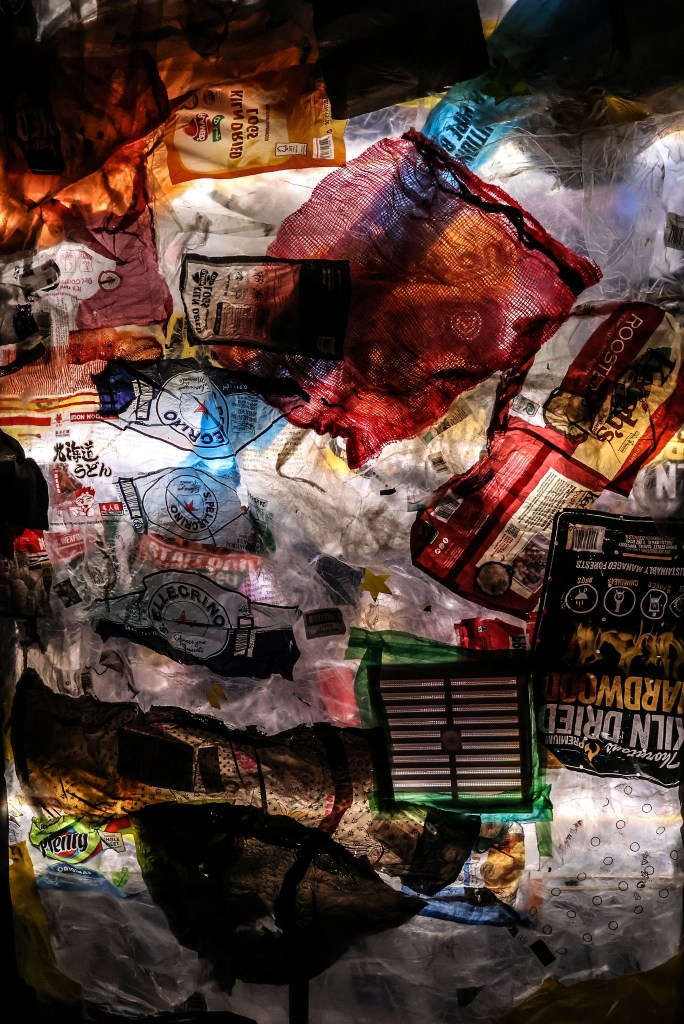
I included the drawings from the community installation in an exhibition of mine which showcased a sculpture of a refrigerator using only the plastic waste from commercial businesses around Ballyvaughan and the local dump. The fridge was constructed mainly of soft plastics, ironed together using a household Iron. I used dark blue paint and stage lighting to dimly light the space, and to showcase the led lighting coming from inside the fridge sculpture. I also created a sound element by recording the sounds of my own fridge and my voice to immerse viewers. This installation was featured in the December 2024-January 2025 exhibition Close Enough at the Burren College of Art gallery.



 Noelle Foden-Vencil