Bioplastic Work
Early 2023 work involved experimenting with place-based bioplastic alternatives to plastic (such as gelatin, foraged carrageenan and other seaweeds). Through foraging and exploration of place, synthetic plastic detritus in the environment also made itself apparent as an abundant and valuable resource. All of the work documented here was exhibited in the Burren College of Art open studios in December 2023.
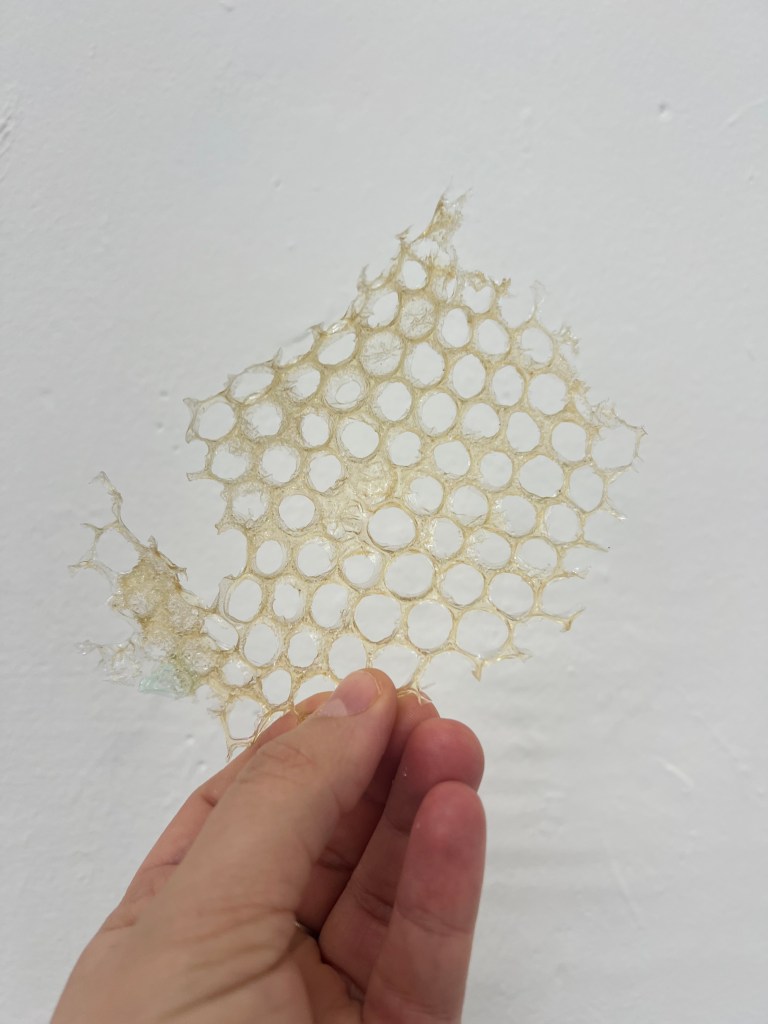
Seen aside and below are some sample bioplastic sculptural pieces which include foraged plastic from Fanore Beach in County Clare, Red Onion skin dye from Savage Craic’s pickled onion off-cuts, mold, bladder-wrack, nori, and gutweed foraged from Fanore Beach. The bioplastic was dried in different ways and on different surfaces to observe the resulting texture. These surfaces included Iron framing from Wasteland Salvage in Scariff, discarded bubble wrap, glass bottles bottoms, a food dehydrator, silica crystals, and handmade porcelain barnacles

Before 2023, my mediums of choice were ceramics and textiles (the mediums I earned my BA in, in 2018). I pivoted away from these mediums due to my curiosity regarding alternative materials, and due to my own climate anxiety surrounding what it meant to be an artist right now. I didn’t want to start from scratch method-wise, so I experimented with the bioplastic’s ability to be sewn. The gelatin-based bioplastics tolerated this quite well.

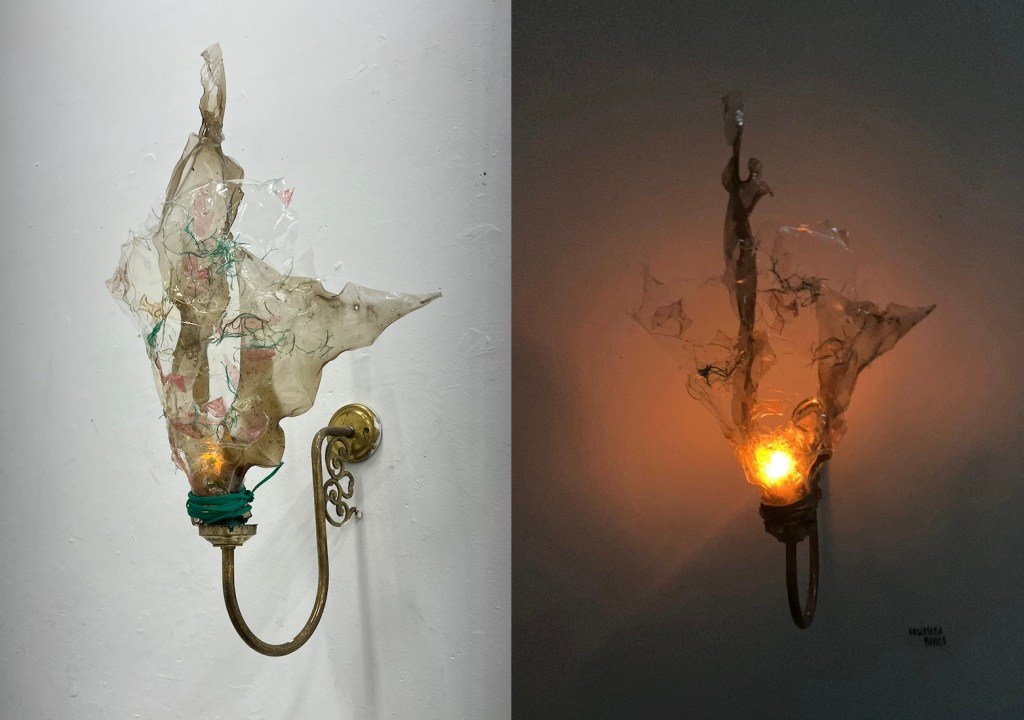
Before settling on gelatin-based bioplastics, I experimented with developing bioplastic recipes sourced entirely from the local seaweed available for foraging. While successful in the sense that it was possible to make a polymer from sea spaghetti, I had immense difficulty keeping the samples from molding (as can be seen here). The drying process for these samples yielded incredibly variable results. Perhaps I will return to this one day.
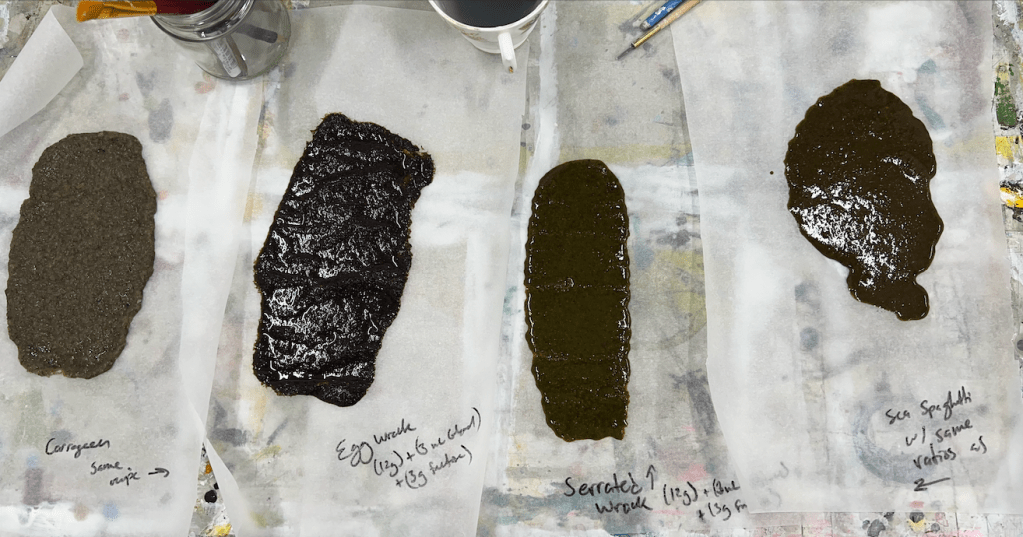


I began experimenting with the creation of 3-dimensional shapes from 2-dimensional paneling. I was very inspired by artist Do Ho Suh’s fabric installations of houses, but I wanted to incorporate bioplastic, discarded materials, or materials found in abundance near me. I liked the precariousness of this composition, and the fact that it was made from ‘trash.’
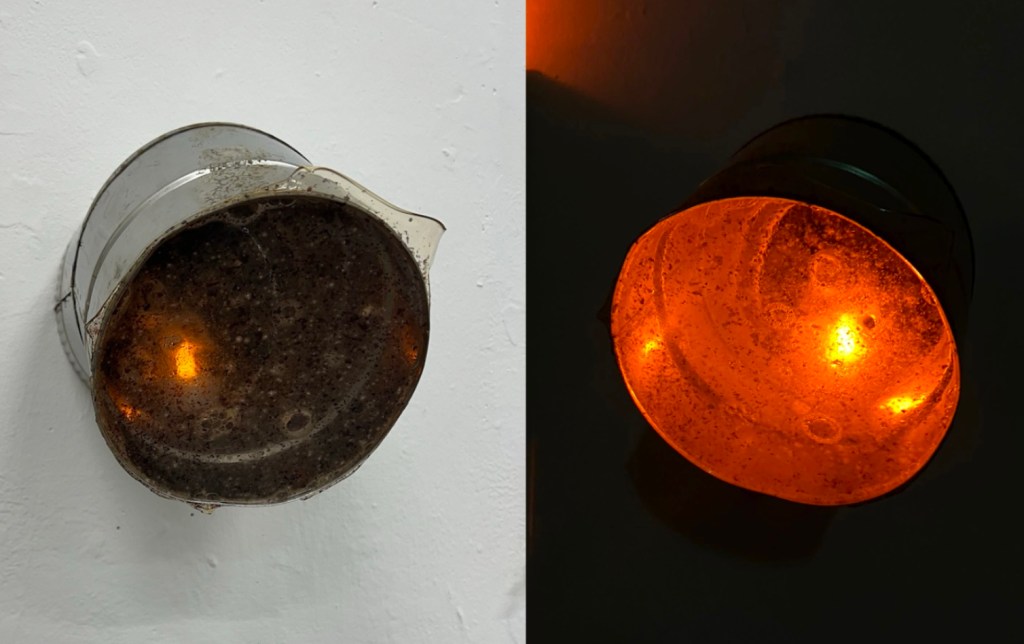
As is probably apparent in this gallery, I became mostly interested in the transparent/translucent qualities associated with the bioplastic. This play with light definitely carries through into my future work.

Collograph Work
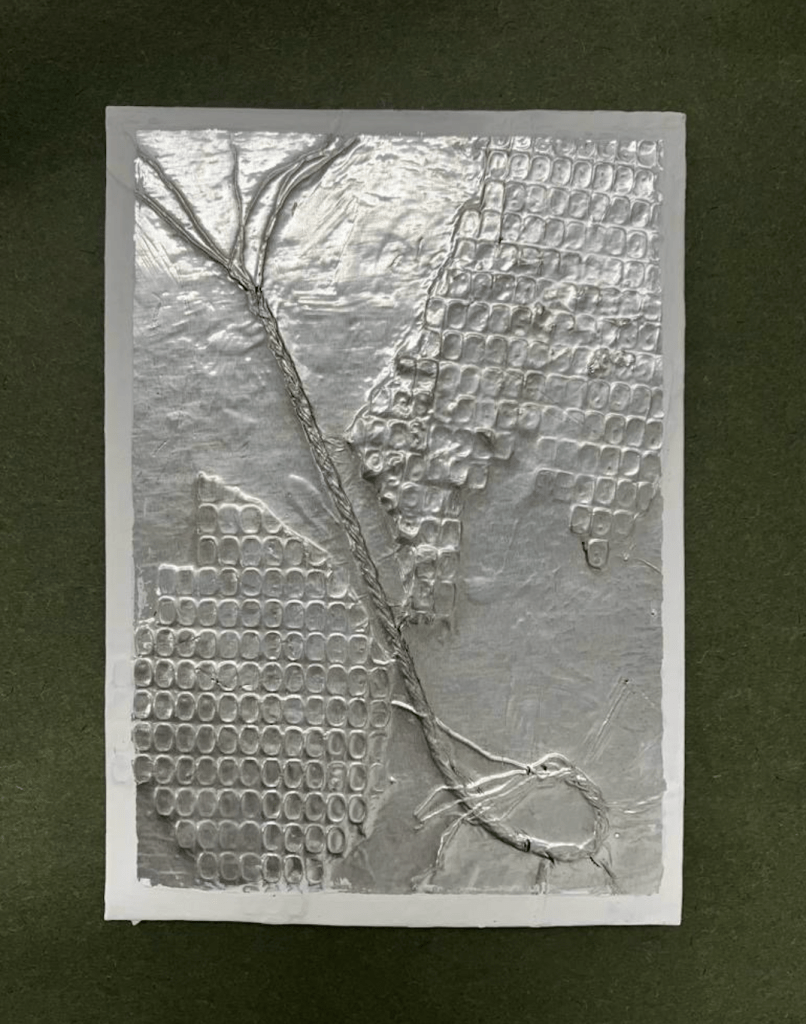
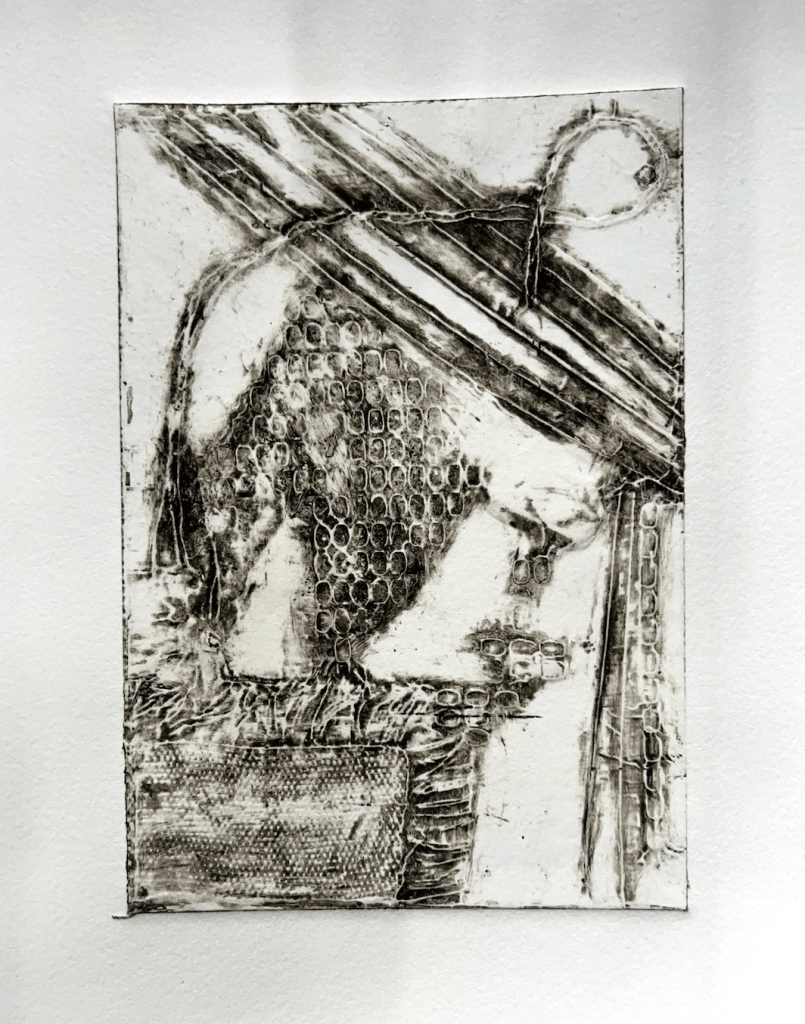
2023 was a time for experimentation in my practice, and I attended a workshop with artist Éilís Murphy on how to make collographs.

 Noelle Foden-Vencil